.png&w=128&q=75)


What is the Range of Toyota Hybrids?
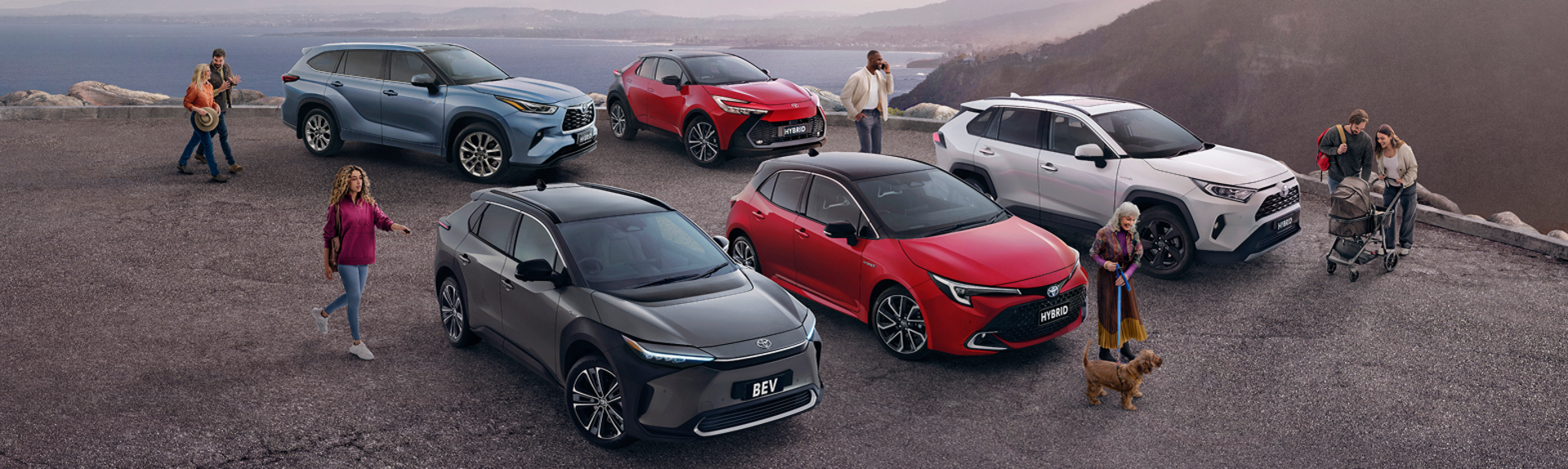
If you're considering a Toyota hybrid, one of the first questions on your mind is probably: how far can I actually drive on a full tank? It's a fair question, and the answer might surprise you. Toyota's self-charging hybrid technology delivers impressive driving ranges that often exceed what you'd get from a traditional petrol vehicle, thanks to outstanding fuel efficiency.
In this guide, we'll break down the driving range of every Toyota hybrid currently available in Australia, explain how Toyota's hybrid system works, and give you a preview of the exciting RAV4 PHEV arriving late 2026.
How Do Hybrids Work?
Before we dive into the numbers, let's clear up a common misconception. Toyota's hybrid electric vehicles (HEVs) are self-charging. This means you never need to plug them in. The battery charges itself through:
Regenerative Braking
Every time you slow down or brake, the electric motor captures energy that would otherwise be lost as heat and stores it in the battery.
Engine charging
When conditions are right, the petrol engine charges the battery while you drive.
Intelligent power management
The system seamlessly switches between electric-only, petrol-only, or combined power depending on your driving conditions.
The result? You fill up at a regular petrol station just like any other car, but you use significantly less fuel and can travel much further on each tank.
Toyota Hybrid Range & Fuel Economy by Model
| Model | Grade | L/100KM | Tank | Estimated Range |
|---|---|---|---|---|
| Yaris | All Grades | 3.3 | 36L | ~1,090KM |
| Yaris Cross | GX, GXL 2WD | 3.8 | 36L | ~950KM |
| Corolla Sedan & Hatch | Ascent Sport | 3.9 | 43L | ~1,100KM |
| Camry | Ascent Sport | 4.0 | 50L | ~1,250KM |
| C-HR | All Grades | 4.0 | 43L | ~1,075KM |
| Corolla Cross | GXL 2WD | 4.2 | 43L | ~1,250KM |
| RAV4 | GX/GXL 2WD | 4.7 | 55L | ~1,170KM |
| Kluger | GX 2WD | 5.6 | 65L | ~1,160KM |
| Tundra | Limited* | ~10.8* | 122L | ~1,100KM |
*Tundra has no official ADR figures (GVM exceeds 3.5 tonnes). Figure shown is real-world highway testing by CarsGuide. Specifications are accurate as of 11th of December 2025
Specifications are accurate as of 11th December 2025. Fuel consumption figures are based on ADR81/02 laboratory testing and may vary depending on driving conditions, vehicle condition, load and accessories fitted. Please confirm current specifications with New Town Toyota before purchase.
New Hybrids Arriving in 2026!
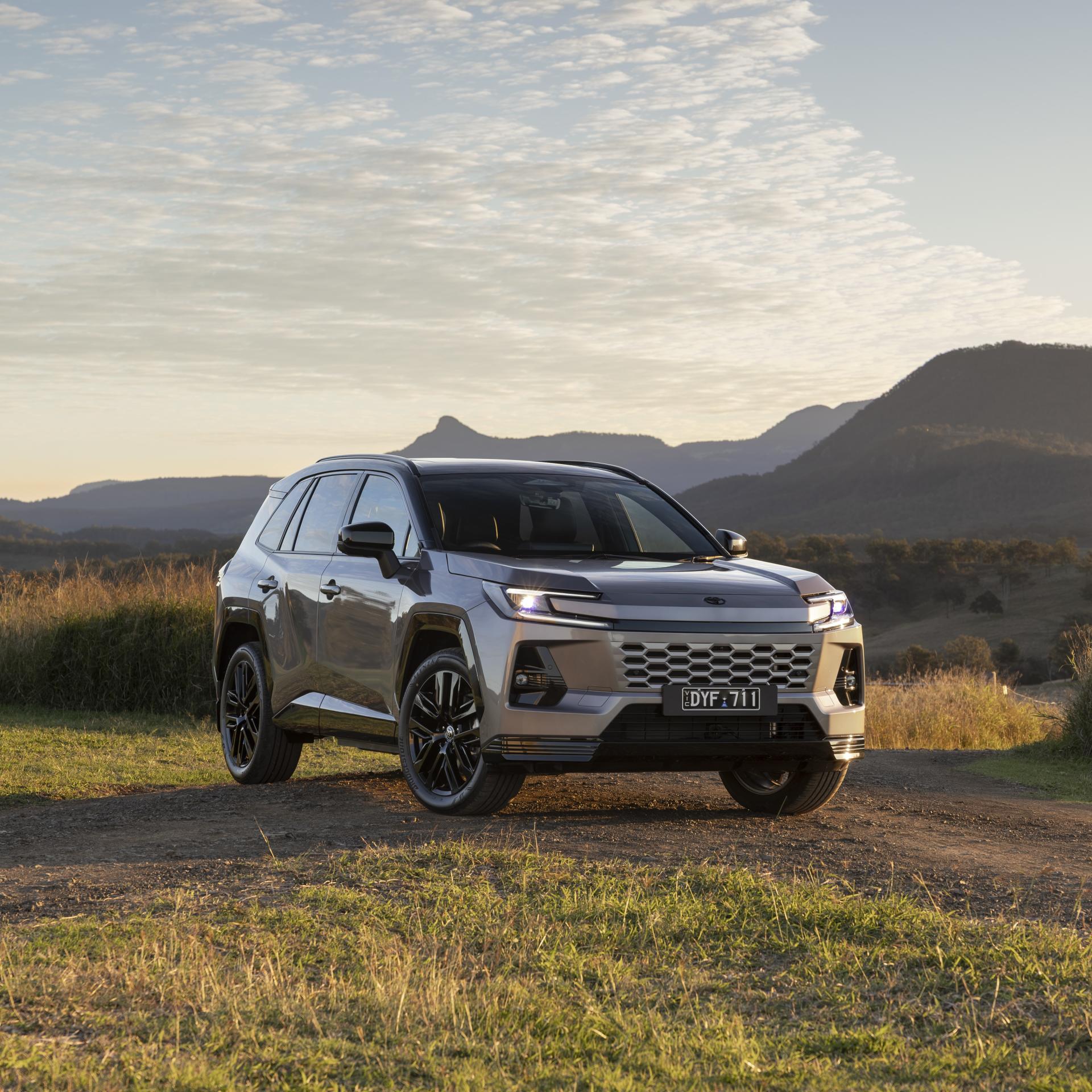
Coming 2026: Toyota RAV4 PHEV
While self-charging hybrids suit most drivers, the all-new RAV4 PHEV offers even greater flexibility with the option of a Plug In Hybrid Powertrain in the XSE (2WD/AWD) and GR Sport (AWD) grades.
- 100km pure electric range (WLTP cycle) before the petrol hybrid system activates.
- 227kW combined output with 6th generation hybrid technology.
- 22.7kWh battery that can be charged at home or public charging stations.
Once the battery depletes, the RAV4 PHEV operates as a standard self-charging hybrid, eliminating range anxiety. Expected arrival: Late 2026.
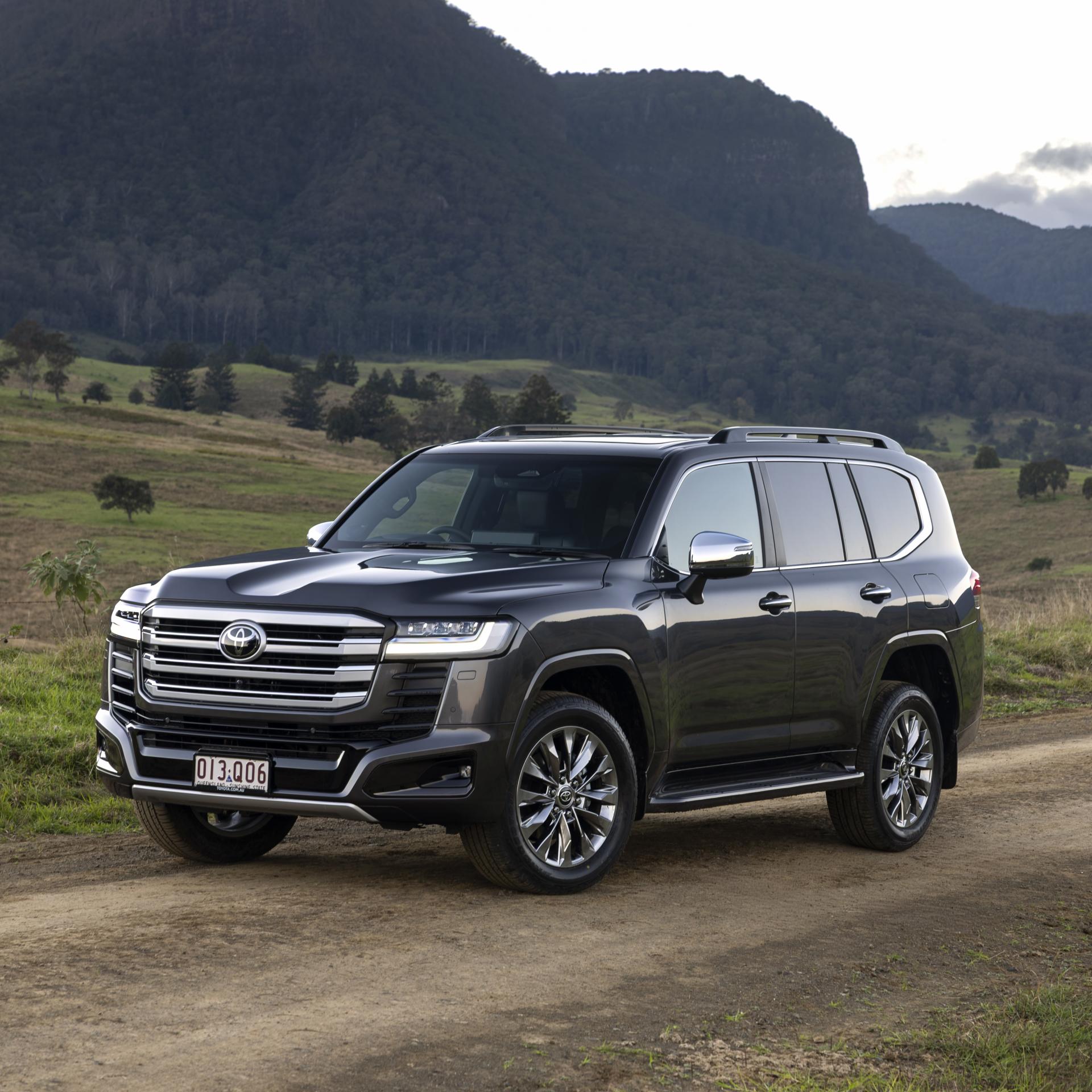
Coming 2026: Toyota LandCruiser 300 Performance Hybrid
The first-ever hybrid Toyota LandCruiser makes its global debut in 2026, with the LandCruiser 300 Series gaining a powerful one-motor hybrid powertrain. This marks a significant milestone for Toyota's flagship 4WD, bringing hybrid technology to the legendary nameplate for the first time.
How Does Hybrid Range Compare to Petrol Range?
Toyota hybrids typically achieve 20-40% better fuel economy than petrol-only vehicles, which translates directly to extended driving range. For context, a comparable petrol-only SUV might consume around 8-10L/100km, while the Toyota Kluger Hybrid achieves just 5.6L/100km. This means the Kluger Hybrid can travel approximately 1,160km on its 65-litre tank, whereas a similar-sized petrol SUV would need to refuel far more frequently. This advantage comes from the hybrid system's ability to run on electric power at low speeds, recover energy through regenerative braking, and operate the petrol engine at its most efficient rev range. You get significantly more kilometres from every tank without changing your driving habits or refuelling routine.
How Does Hybrid Range Compare to Petrol Range?
Battery electric vehicles (EVs) typically offer 400-600km of range per charge, while Toyota hybrids achieve 950-1,250km per tank. The key difference is how you refuel. A hybrid can be refuelled in minutes at any petrol station, while an EV uses Australia's growing network of charging infrastructure, with fast chargers providing a top-up in around 20 minutes or convenient overnight charging at home. For drivers who prefer the flexibility of traditional refuelling or regularly travel long distances, hybrids offer a familiar ownership experience with improved efficiency. EVs are ideal for drivers with access to home or workplace charging who want zero tailpipe emissions for their daily driving.
How Does Hybrid Range Compare to 48-Volt Range?
48-volt systems, like those found in the Toyota HiLux and LandCruiser Prado, offer more modest efficiency gains than Toyota's full hybrid technology. A 48-volt system cannot drive on electric power alone. Instead, it uses a small electric motor to assist the engine during acceleration and restart the engine more smoothly with stop-start technology. This typically improves fuel economy by 5-10%, compared to the 20-40% improvement seen in full hybrids. Toyota's self-charging hybrids can travel at low speeds on electric power alone, switch seamlessly between petrol and electric, and recover more energy through regenerative braking, resulting in substantially better fuel economy and longer range from each tank.
Which Toyota Hybrid is Best for You?
With so many hybrid options available, choosing the right one depends on your lifestyle and driving needs.

Toyota Yaris
Toyota Yaris
Best for city commuters and first-car buyers who want maximum fuel efficiency in a compact, easy-to-park package. At 3.3L/100km, it's Toyota's most fuel-efficient vehicle.

Toyota Corolla
Toyota Corolla
Best for drivers wanting a versatile, affordable hybrid with proven reliability. The sedan offers a larger 470L boot for families, while the hatch delivers a sportier driving experience.

Toyota Yaris Cross
Toyota Yaris Cross
Best for those who love the efficiency of a small car but want the higher seating position and SUV styling of a compact crossover.

Toyota C-HR
Toyota C-HR
Best for style-conscious drivers who want European design flair and a premium feel in a compact SUV, with the sporty GR Sport offering AWD capability.

Toyota Corolla Cross
Toyota Corolla Cross
Best for small families needing more space than a hatch but wanting to keep running costs low. Up to 425L of boot space with the practicality of a raised SUV.

Toyota Camry
Toyota Camry
Best for those who spend time on the highway or need a comfortable, spacious sedan for work. The 1,250km range is the longest in the hybrid lineup.

Toyota RAV4
Toyota RAV4
Best for active families and adventure seekers who need space, AWD capability and the flexibility to tow up to 1,500kg (HEV). PHEV option coming Q3 2026 with 100km electric range.

Toyota Kluger
Toyota Kluger
As the only 7-seat Toyota Hybrid SUV in the line up right now, the Kluger is best for larger families needing ample space without compromising on fuel economy. AWD capability and 2,000kg towing capacity make it ideal for caravans and trailers.

Toyota Tundra
Toyota Tundra
Best for drivers who need serious towing power (3,500kg) and full-size ute capability but want better efficiency than a traditional V8. The i-Force MAX hybrid delivers 326kW and 790Nm.
Find your perfect Hybrid Toyota today!
Explore our range at New Town Toyota or contact our team to check availability, secure incoming stock or book your test drive.
More Blogs For You


← Swipe →