.png&w=128&q=75)


PHEV vs EV Charging: What's the Difference?
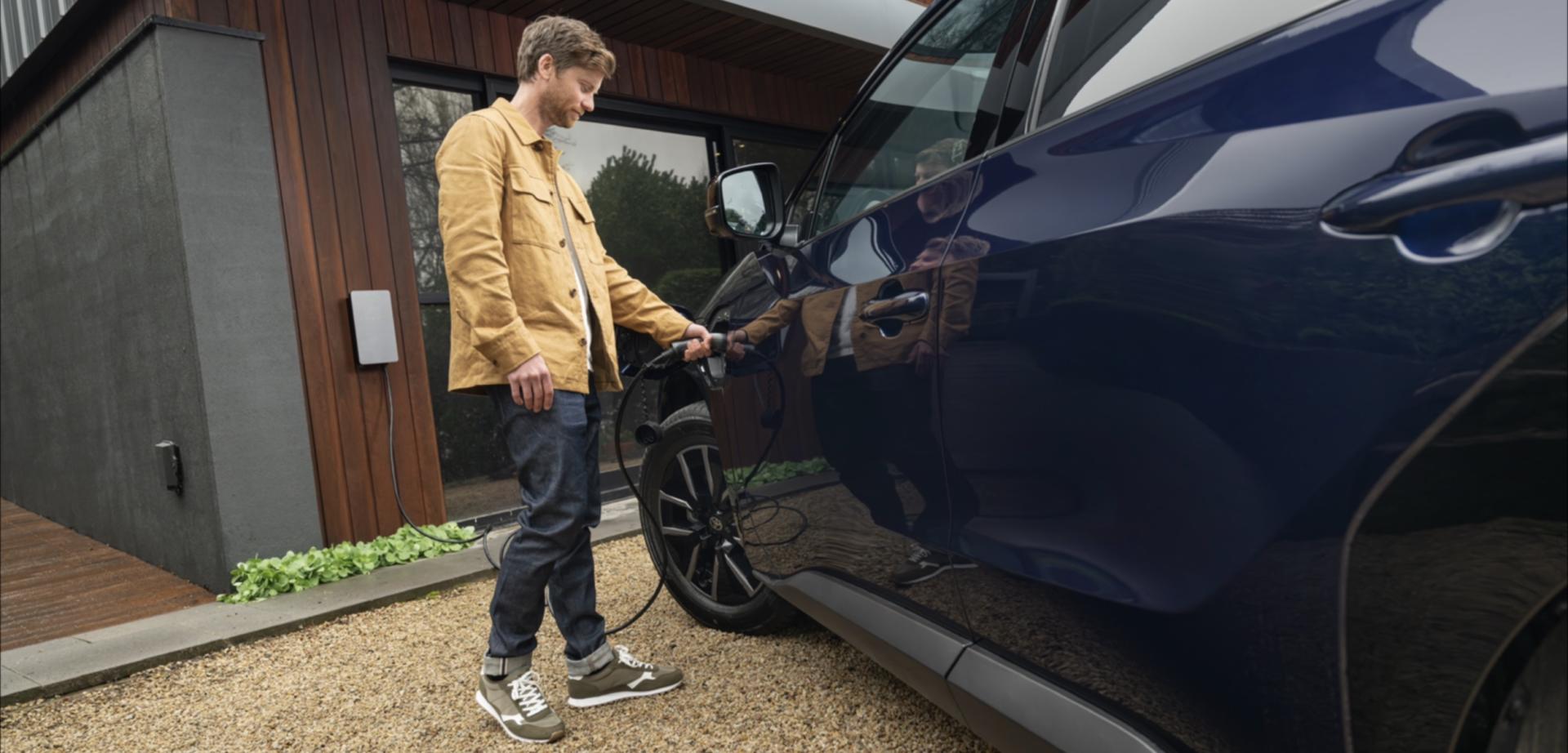
If you're exploring Toyota's electrified range, you've probably noticed that both Plug-in Hybrid Electric Vehicles (PHEVs) and Battery Electric Vehicles (BEVs) need to be plugged in to charge. So what's actually different between them?
The good news is that PHEVs and BEVs use the same charging infrastructure. You can charge both at home using a standard powerpoint or a dedicated wall charger, and both are compatible with public charging stations across Australia. The key differences come down to charging times, costs, and what happens when the battery runs low.
Let's break it down so you can decide which electrified Toyota suits your lifestyle.
Same Plugs, Same Stations
Whether you’re driving a Toyota bZ4X, bZ4X Touring, RAV4 Plug-in Hybrid or the HiLux BEV, you’ll be using the same Type 2 AC connector for home and public AC charging. Both vehicle types are also compatible with DC fast charging at public stations, though PHEVs typically have lower maximum charging speeds due to their smaller batteries. This means you don't need to worry about finding different chargers or installing separate equipment at home. One charging setup works for both.
Charging options for both PHEVs and BEVs include:
- Mode 2 charging from a standard household powerpoint (included cable with all Toyota electrified vehicles)
- Mode 3 charging via a dedicated AC wall charger installed at home
- Public AC chargers found at shopping centres and workplaces
- DC fast chargers located at major highways and service stations
Different Charging Times
This is where PHEVs and BEVs start to diverge. Because PHEVs have smaller batteries (designed for shorter electric-only trips), they charge much faster than fully electric vehicles.
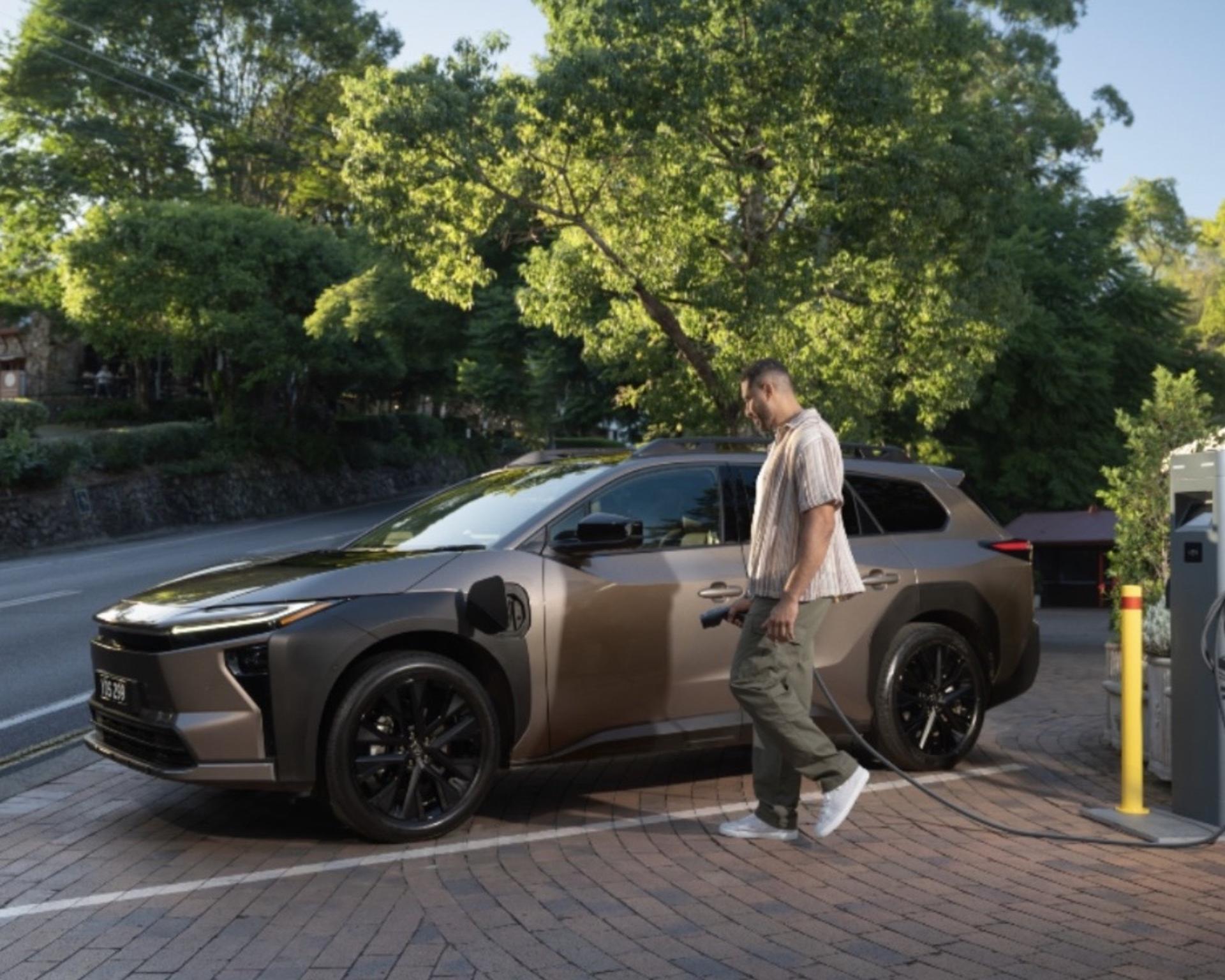
Toyota bZ4X and bZ4X Touring
The bZ4X now runs a 74.7kWh battery across the 2WD, AWD and bZ4X Touring, so the charging times are the same whichever one you choose. Using a standard household powerpoint (Mode 2), expect approximately 30 hours or more for a full charge from 10% to 100%. With a dedicated AC wall charger (Mode 3), the time depends on your charger.
A common 7kW single-phase unit takes around 9 to 10 hours, while Toyota’s official figures show 10% to 100% in approximately 3.5 hours at the bZ4X’s maximum 22kW three-phase rate. At a public DC fast charger, the bZ4X accepts up to 150kW and goes from 10% to 80% in approximately 28 minutes.
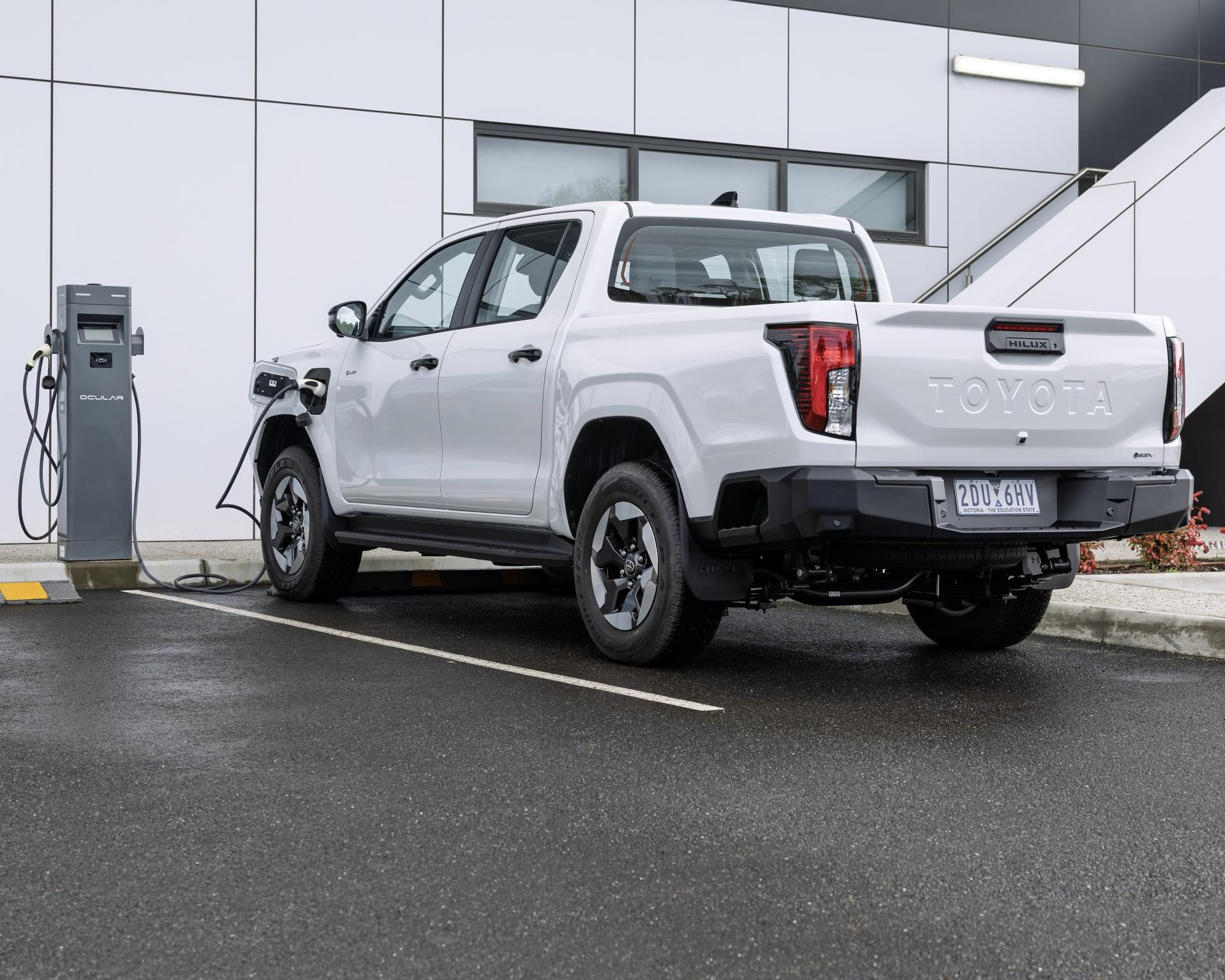
Toyota HiLux BEV
The Battery Electric HiLux uses a smaller 59.2kWh battery, built around a different kind of driving. Toyota’s figures show 10kW three-phase AC charging takes it from 10% to 100% in approximately 6.5 hours, which suits overnight charging at home or at a depot, while a 150kW DC fast charger covers 10% to 80% in as little as 30 minutes. Driving range is rated at 315km on the NEDC cycle for pick-up variants and 245km for the SR cab-chassis, so it works best where daily distances are predictable and there’s a reliable place to plug in at the end of the day. Deliveries were scheduled from the second quarter of 2026, and our team can confirm current local availability.
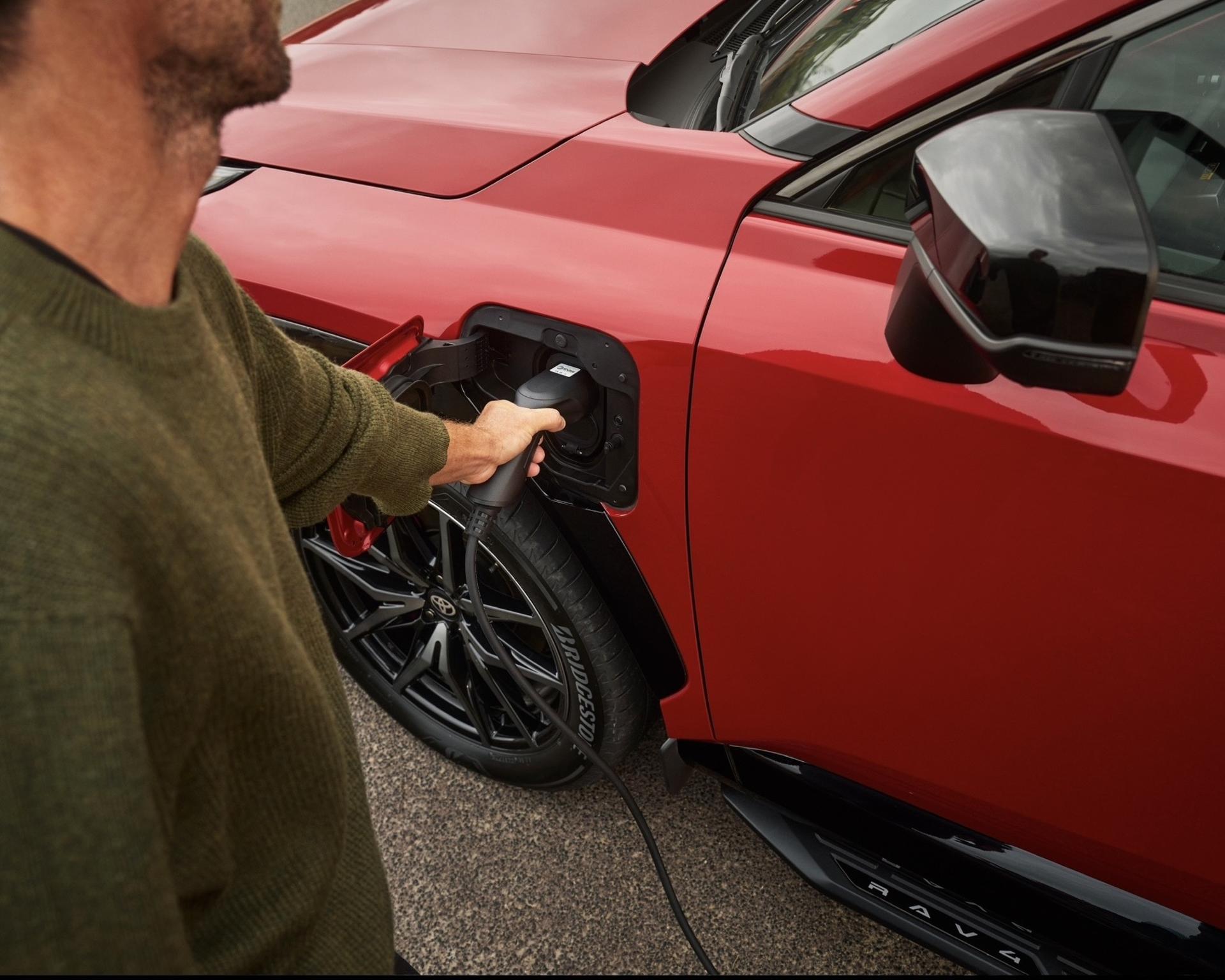
Toyota RAV4 Plug-in Hybrid (PHEV)
The RAV4 PHEV pairs a 22.7kWh battery with the XSE and GR Sport grades. From a standard powerpoint, a full charge takes around 8 to 10 hours overnight. With a dedicated home wall charger (up to 11kW three-phase), Toyota’s official figures show a 10% to 100% charge in approximately 2.5 hours. The RAV4 PHEV also supports 50kW DC fast charging, reaching 10% to 80% in approximately 28 minutes.
For most Perth drivers, overnight charging at home covers daily driving needs for both vehicle types. The difference becomes noticeable on longer trips or when you need a quick top-up during the day.
Different Charging Costs
Charging costs depend on your electricity rates, when you charge, and how much battery capacity you're filling. Here's how PHEVs and BEVs compare.
Home charging costs in Western Australia
Home charging costs in Western Australia
Based on the current Synergy Home Plan (A1) residential tariff of around 31.6 cents per kWh, a full charge of the bZ4X’s 74.7kWh battery costs approximately $23 to $25, giving you up to 591km of WLTP range in the 2WD or up to 517km in the AWD. The HiLux BEV’s 59.2kWh battery costs roughly $18 to $20 to fill, while the RAV4 PHEV’s 22.7kWh battery comes in around $7 to $8 and provides up to 154km of electric-only driving in the 2WD, or up to 144km in AWD and GR Sport variants (NEDC).
Cost per 100km comparison
Cost per 100km comparison
Running a BEV like the bZ4X costs approximately $4 to $6 per 100km when charged at home. That's significantly cheaper than a petrol vehicle, which typically costs $14 to $18 per 100km depending on fuel prices. A PHEV operating in electric mode costs about the same per kilometre as a BEV. However, when the petrol engine activates (after the battery depletes), running costs increase to hybrid levels, which are still lower than a conventional petrol vehicle.
Smart charging tip: If you have a smart meter, charging during off-peak hours (typically late night to early morning) can reduce your costs significantly. Some Perth households with solar panels can charge their vehicles during the day for near-zero running costs.
The PHEV Advantage: Petrol as Your Backup
Here's the biggest practical difference between PHEVs and BEVs. When a BEV's battery runs flat, you need to find a charging station before you can continue driving. When a PHEV's battery runs low, the petrol engine seamlessly takes over, and you keep going.
This gives PHEVs a significant advantage for drivers who regularly travel longer distances, visit areas with limited charging infrastructure, or simply want peace of mind without worrying about range.
How the RAV4 PHEV handles this:
When fully charged, the RAV4 PHEV can travel up to 154km on electric power alone in 2WD form, or up to 144km in AWD and GR Sport guise (NEDC). That’s more than enough for most daily commutes and errands around Perth.
Once the battery depletes, the vehicle automatically switches to hybrid mode, using the 2.5-litre petrol engine combined with electric motors for efficient driving. The total combined range (electric plus petrol) means you can drive hundreds of kilometres without stopping, then simply refuel at any petrol station like you would with a conventional car.
What happens if a BEV runs out of charge?
If a BEV's battery runs completely flat, the vehicle will gradually lose power and stop. Unlike a petrol car, there's no reserve. You'll need roadside assistance to tow the vehicle to a charging station or dealership. This is why planning your charging stops is important for longer BEV journeys.
Which Charging Approach Suits You?
A BEV might be right for you if
A BEV might be right for you if
• You primarily drive shorter distances within metropolitan Perth
• You have reliable home charging (garage or carport with power access)
• You're comfortable planning charging stops for longer trips
• You want zero tailpipe emissions and the lowest possible running costs
• You run a business with vehicles that return to the same base each night, where a HiLux BEV can charge on site
A PHEV might be right for you if
A PHEV might be right for you if
• You regularly travel longer distances or to regional areas
• You want electric driving for daily commutes but need petrol backup for flexibility
• Charging infrastructure at home or work is limited
• You're transitioning from petrol and want the security of a fuel tank
Charging at Home: Getting Set Up
Both PHEVs and BEVs come with a Mode 2 charging cable that plugs into any standard Australian powerpoint. This is the simplest way to start charging at home without any additional equipment.
For faster, more convenient home charging, many owners invest in a dedicated AC wall charger (Mode 3). Toyota partners with JET Charge to arrange professional installation. The process is straightforward: complete an online enquiry, receive a quote based on your switchboard and preferred location, then schedule installation with a licensed electrician.
A dedicated wall charger is particularly worthwhile for BEV owners who want to fully charge overnight or PHEV owners who want rapid top-ups between trips. Toyota Go members buying a new bZ4X can currently choose between a complimentary 7kW JET Charge home charger or a 12-month Chargefox subscription capped at 625kWh, which is worth factoring in when you’re weighing up the cost of getting set up.
Public Charging Across Australia
Australia’s public charging network is growing rapidly, with more than 5,000 public charging sites nationally as of 2026. Western Australia has seen significant expansion, including the completion of the WA EV Network, a government-backed corridor of more than 100 fast and ultra-fast charging points across 49 locations from Kununurra in the north down to the South Australian border.
Where to find public chargers:
Shopping centres and retail precincts often have AC chargers (free or low-cost) where you can top up while you shop
Major highways and service stations feature DC fast chargers for quick stops on longer journeys
Workplaces are increasingly installing chargers for employee use
Apps like PlugShare and Chargefox help you locate nearby stations and check availability
Both PHEVs and BEVs can use these public chargers, though BEV owners typically rely on them more during longer trips.
Looking After Your Battery
Toyota’s electrified vehicle batteries are engineered for durability and backed by extensive testing. Traction battery cover starts at five years on a BEV and eight years on a PHEV or hybrid, and extends to up to 10 years with an annual traction battery health check at your Toyota dealer (conditions apply).
Tips for maximising battery health:
For everyday charging, use AC charging (home wall charger or public AC stations) when possible. Reserve DC fast charging for when you need a quick boost on the road. Avoid letting the battery run completely flat or charging to 100% frequently. Charging to 80% and stopping there actually puts less stress on the battery and gives you more usable charge in less time.
The Bottom Line
PHEVs and BEVs share the same charging infrastructure, making it easy to switch between them or have both in the household. The main differences are charging times (faster for PHEVs due to smaller batteries), total charging costs (lower for PHEVs per charge, but BEVs cost less per kilometre in pure electric mode), and what happens when the battery runs out (PHEVs switch to petrol, BEVs need to recharge).
If you value the flexibility of a petrol backup while enjoying electric driving for daily trips, a PHEV like the RAV4 Plug-in Hybrid offers the best of both worlds. If you’re ready to go fully electric and can plan around charging, the bZ4X and bZ4X Touring deliver zero tailpipe emissions and the lowest running costs, and the HiLux BEV brings the same thinking to the worksite for businesses running back-to-base vehicles.
Either way, you're making a smarter choice for your wallet and the environment.
Ready to Experience Electrified Driving
At New Town Toyota, we’re early adopters of EV and hybrid education, helping Perth drivers find the right electrified vehicle for their lifestyle. Whether you’re curious about the bZ4X and bZ4X Touring, interested in the RAV4 Plug-in Hybrid, weighing up a HiLux BEV for your business, or exploring our hybrid range, our team is here to help.
Explore Toyota Electrified Vehicles
Experience Electric Driving at New Town Toyota
Get Expert EV Charging Advice
Frequently Asked Questions
Can a plug-in hybrid and an electric vehicle use the same charger?
Do I need a dedicated wall charger to charge a PHEV or EV at home?
Which charges faster, a PHEV or a BEV?
What happens when a PHEV or EV battery runs low?
Is a PHEV cheaper to charge than a BEV?
How far can Toyota’s PHEV and EV models travel on a charge?
What battery warranty applies to Toyota PHEVs and EVs?
See What Our Customers Think
4.2 rating out of 1136 reviews
Donna Toy
No issues very easy and professional
Pardeep Kumar
Absolutely fantastic service from Sarath and his manager at New Town Toyota! Sarath was incredibly friendly, professional and genuinely helpful. Never pushy ...
View moreRebecca Hallam
Ready on time. Khish was great
Nigel Rigby
The NTT Service department have again provided exceptional service. Always easy to book, always meet their time estimate and the work done is quality. Will a...
View moreIsaac Cornish
Great service, the team at New Town were super friendly and made the process incredibly easy. They went out of their way to help and did an all round fantast...
View moreJoel Lally
Highly recommend Alex King and Nick down at New Town Toyota. Very helpful and professional but most importantly great blokes.
Ryan Giardullo
"The professionalism and courtesy were exceptional—exactly what you’d expect from Toyota's high standards and pricing!"
Dhendup Tshering
I had a fantastic experience dealing with Andy, the finance and insurance manager at new town Toyota. He was incredibly polite, professional and clear throug...
View moreKumaran A
No hassle. And very good customer service
Japnam Singh Ghuman
Very good service all staff very nice Good customer service
← Swipe →

New Town Toyota
- Monday: 8:00am-6:00pm
- Tuesday: 8:00am-6:00pm
- Wednesday: 8:00am-8:00pm
- Thursday: 8:00am-6:00pm
- Friday: 8:00am-6:00pm
- Sat: 8:00am-1:00pm
- Sun: Closed
Enquiry Form
New Town Toyota
New Town Toyota - Service
New Town Toyota - Parts
More Blogs For You


← Swipe →