.png&w=128&q=75)


The Best Fuel-Efficient Cars to Buy in Australia Right Now
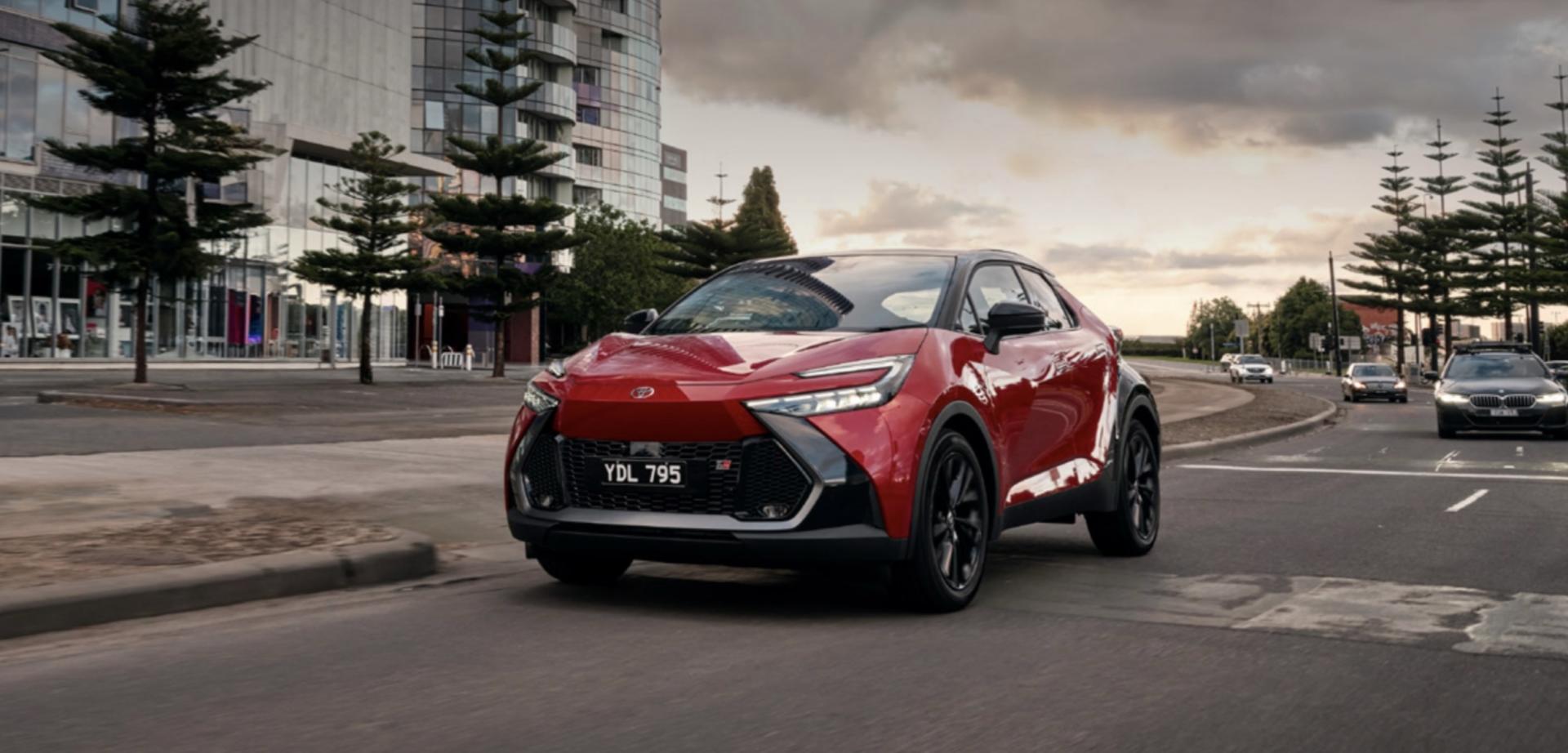
With petrol now sitting above $2.00 a litre across Perth and most major Australian cities, choosing a fuel-efficient car has moved from a nice-to-have to a genuinely smart financial decision. Whether you fill up every week or every fortnight, the vehicle you drive directly determines how much of that cost you carry. The good news? The most fuel-efficient new cars available in Australia right now are also genuinely capable, well-equipped, and built for real-world driving. This is not a trade-off.
Below is a rundown of the best fuel-efficient vehicles available through New Town Toyota, ranked by combined fuel consumption. All figures are sourced from official ADR81/02 combined cycle laboratory testing.
A Quick Note on How Fuel Savings Add Up
Before we get into the models, it is worth putting the numbers in context. If you drive the Australian average of around 15,000 kilometres per year and petrol sits at $2.10 per litre, here is what different fuel consumption rates cost you annually:
| Consumption | Litres/Year | Cost/Year* | vs 8L/100km |
| 8.0L/100km (petrol avg) | 1,200 L | $2,520 | Baseline |
| 5.6L/100km (Kluger Hybrid) | 840 L | $1,764 | Save ~$756 |
| 4.8L/100km (RAV4 Hybrid) | 720 L | $1,512 | Save ~$1,008 |
| 4.2L/100km (Corolla Cross) | 630 L | $1,323 | Save ~$1,197 |
| 4.0L/100km (C-HR / Camry) | 600 L | $1,260 | Save ~$1,260 |
| 3.8L/100km (Yaris Cross) | 570 L | $1,197 | Save ~$1,323 |
*Based on 15,000km/year at $2.10/L. Fuel consumption figures from ADR81/02 laboratory testing. Actual consumption will vary depending on driving conditions, vehicle condition, load and accessories fitted. Figures for comparison purposes only.
The Best Fuel-Efficient Cars Right Now
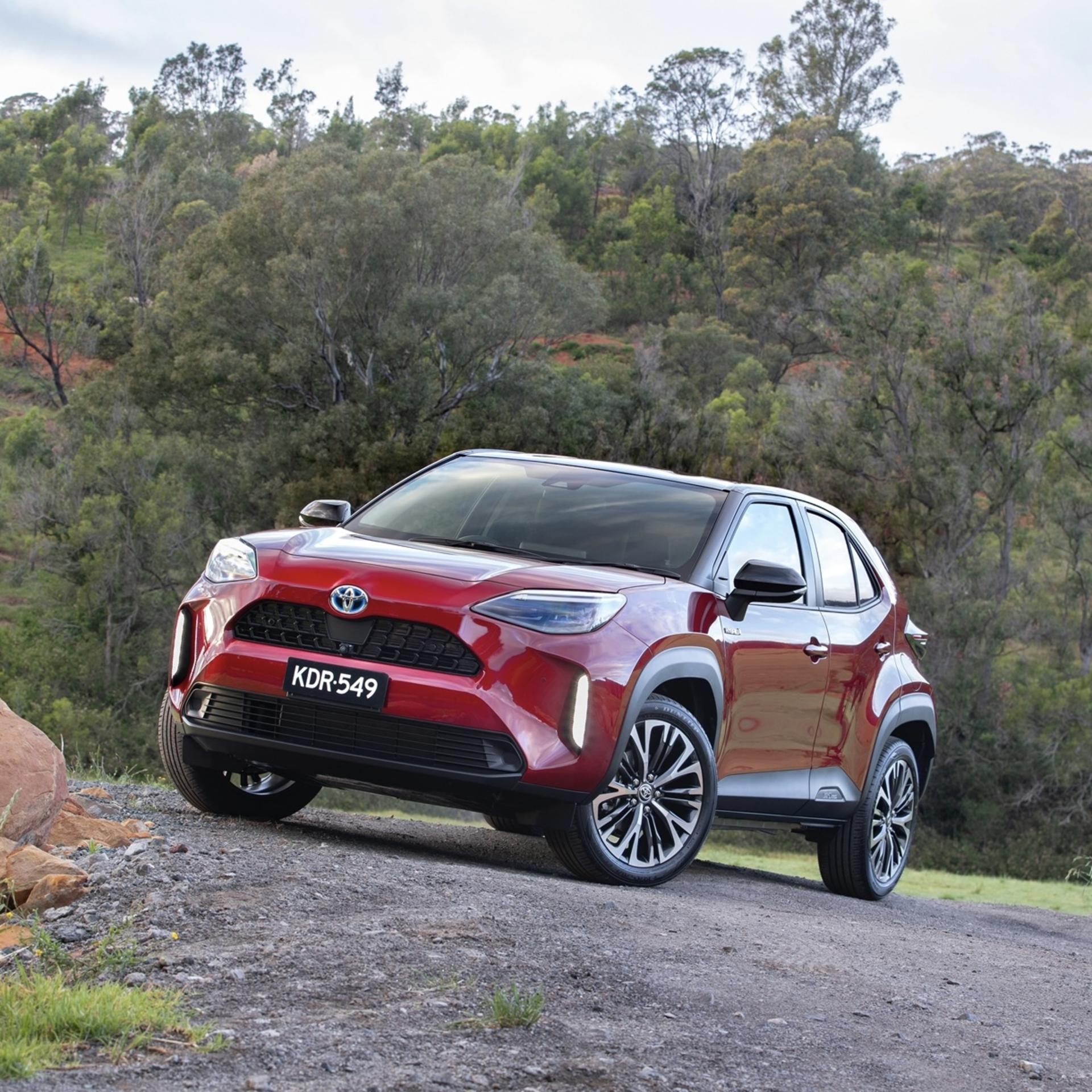
Toyota Yaris Cross Hybrid
From 3.8L/100km
The Yaris Cross Hybrid is Toyota's most fuel-efficient model in Australia, and it achieves that without feeling like a compromise. It is a proper compact SUV with a raised ride height, five seats, and 390 litres of boot space, powered by a 1.5-litre three-cylinder hybrid system producing 85kW of combined output.
Combined fuel consumption:
3.8L/100km (2WD) / 4.0L/100km (AWD)
In urban conditions, where the electric side of the hybrid system does the heavy lifting, real-world consumption can dip even lower. If you spend most of your time in Perth traffic, this is where the Yaris Cross quietly stands apart from the competition.
Best for:
Daily commuters, first-time SUV buyers, and anyone where running costs are the top priority.
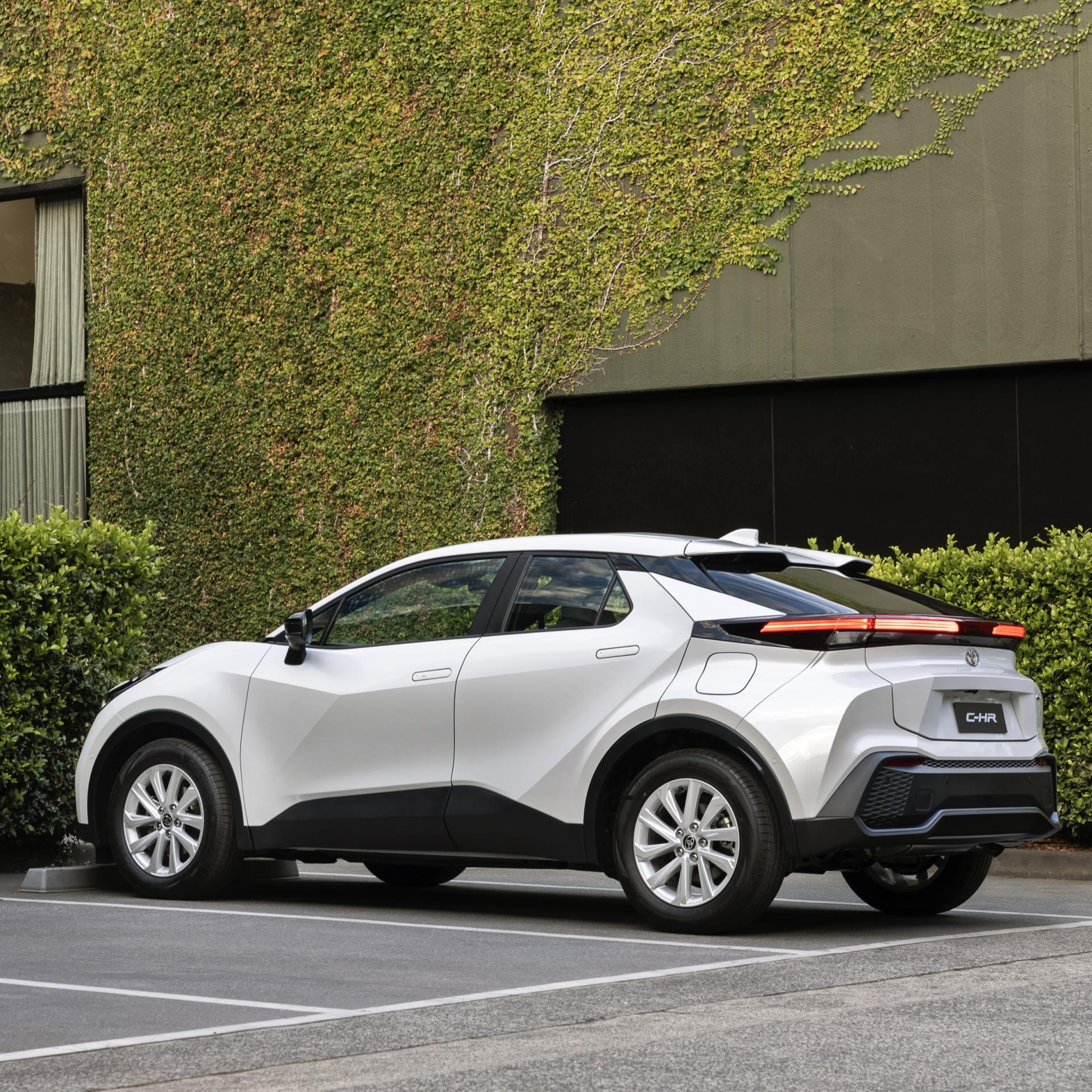
Toyota C-HR Hybrid
From 4.0L/100km
The C-HR brings a bolder design sensibility than most of its segment peers, and pairs that with genuine hybrid efficiency. The GXL and Koba grades use a 1.8-litre hybrid producing 103kW. If you want more punch, the GR Sport steps up to a 2.0-litre setup with AWD and 146kW, still managing 4.1L/100km combined.
Combined fuel consumption:
4.0L/100km (GXL/Koba) / 4.1L/100km (GR Sport AWD)
Best for:
Style-conscious buyers who want a premium feel and strong urban efficiency.
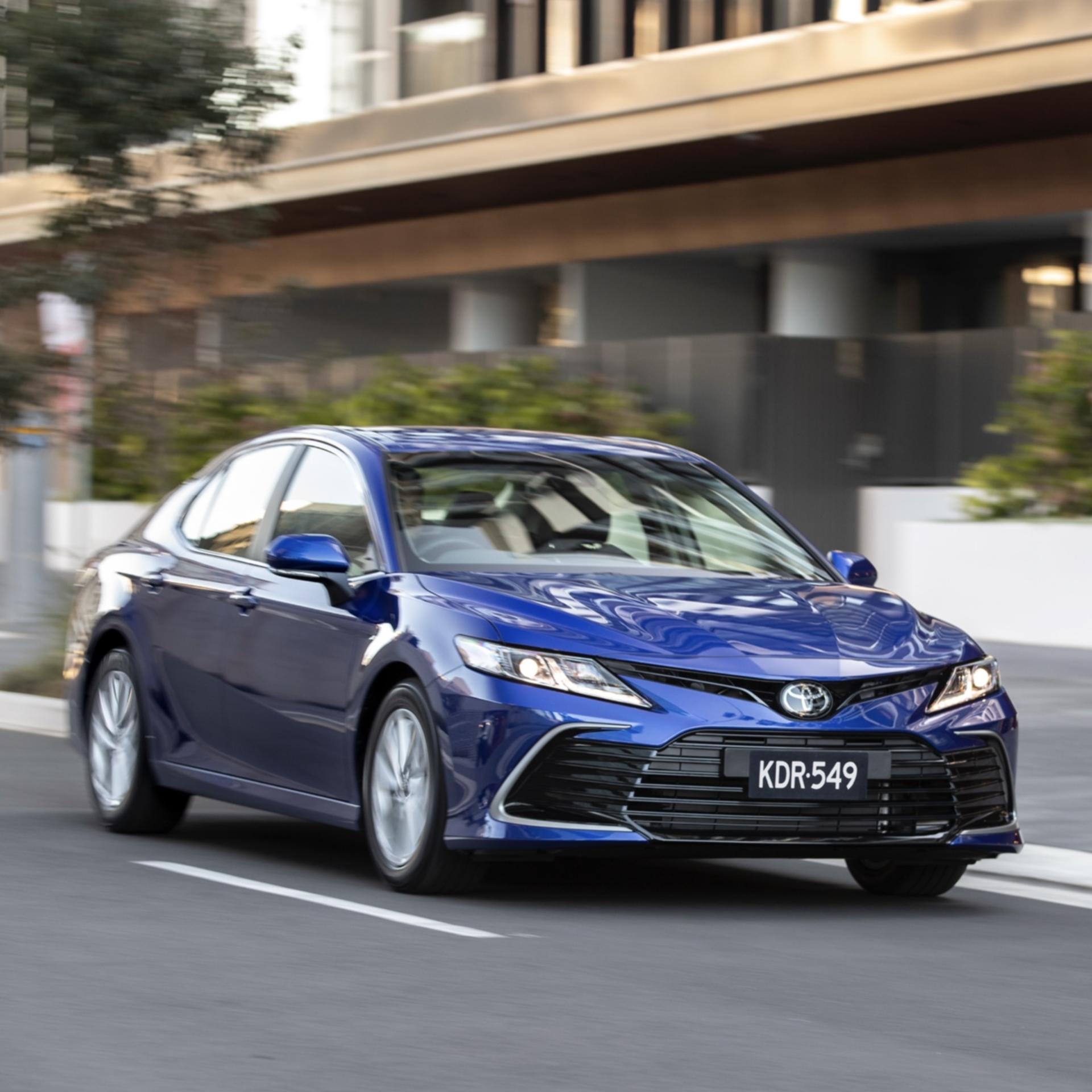
Toyota Camry Hybrid
4.0L/100km
The current Camry Hybrid uses Toyota's fifth-generation 2.5-litre Hybrid Electric powertrain, which delivers 4.0L/100km across all grades and all three official test cycles: combined, urban, and extra-urban. That consistency is unusual and reflects how well-tuned the system is across a range of driving conditions.
Combined fuel consumption:
4.0L/100km (all grades)
With a 50-litre fuel tank, the Camry Hybrid offers a theoretical driving range of around 1,250 kilometres. For families, executives, and anyone covering long distances regularly, that kind of range between fill-ups changes the weekly routine.
Best for:
Families, business drivers, and anyone who covers significant highway kilometres and wants a spacious, refined cabin.
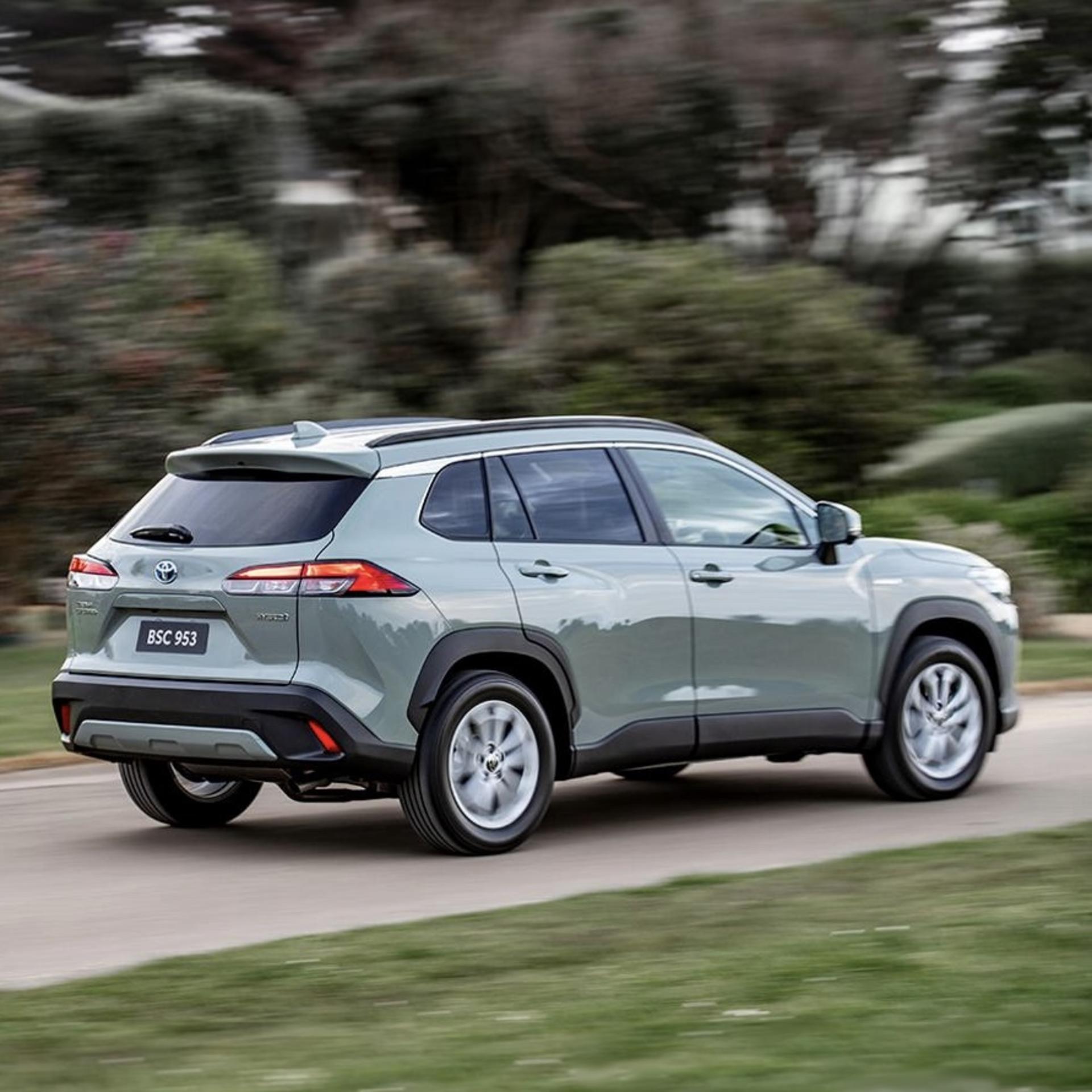
Toyota Corolla Cross Hybrid
From 4.2L/100km
The Corolla Cross sits between the compact small SUVs and the full-sized RAV4, offering 425 litres of boot space in 2WD form and 146kW of combined power from its 2.0-litre hybrid system. It is one of Toyota's fastest-growing models, and the hybrid powertrain is the clear pick of the range.
Combined fuel consumption:
4.2L/100km (2WD) / 4.4L/100km (AWD) / 4.5L/100km (GR Sport AWD)
Best for:
Small families who need more space than a hatchback but want to keep running costs genuinely low.
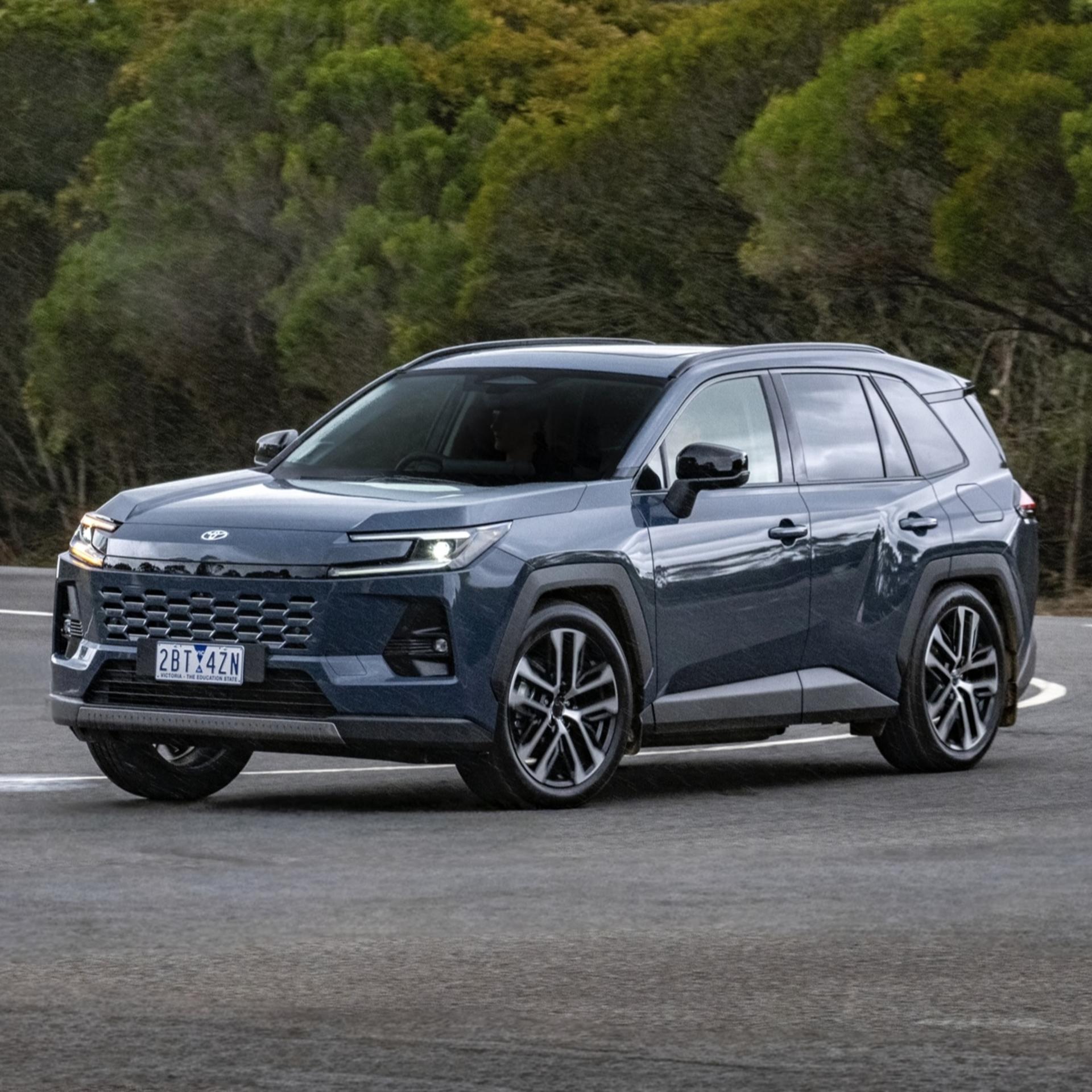
Toyota RAV4 Hybrid
From 4.7L/100km
Australia's best-selling SUV in hybrid form. The RAV4 Hybrid pairs a 2.5-litre four-cylinder engine with Toyota's hybrid system and standard AWD across all grades. It delivers genuine go-anywhere capability with fuel economy that would have seemed impossible in a mid-size SUV just a few years ago.
Combined fuel consumption:
4.7-4.8L/100km
At current petrol prices, the RAV4 Hybrid saves you over $1,000 per year compared with a typical petrol SUV consuming around 8L/100km. That saving grows further the longer prices remain elevated.
Best for:
Active families, adventure-ready drivers, and anyone needing AWD capability with genuine efficiency.
Which One Is Right for You?
The honest answer depends on how you use your car. If you are primarily in the city, smaller hybrids like the Yaris Cross and C-HR will return their best real-world numbers. If you cover regional or highway kilometers regularly, the Camry and RAV4 Hybrid balance efficiency with the range and comfort you need.
Every Toyota hybrid on this list is self-charging, meaning you never plug in. The battery charges itself through regenerative braking and intelligent energy management as you drive. There is nothing to change about your routine.

Talk to the Team at New Town Toyota
If you are looking at your weekly fuel bill and wondering whether now is the right time to make a change, the team at New Town Toyota is here to help. We can walk you through the running costs, compare models to your lifestyle, and get you behind the wheel of a hybrid to feel the difference for yourself.